
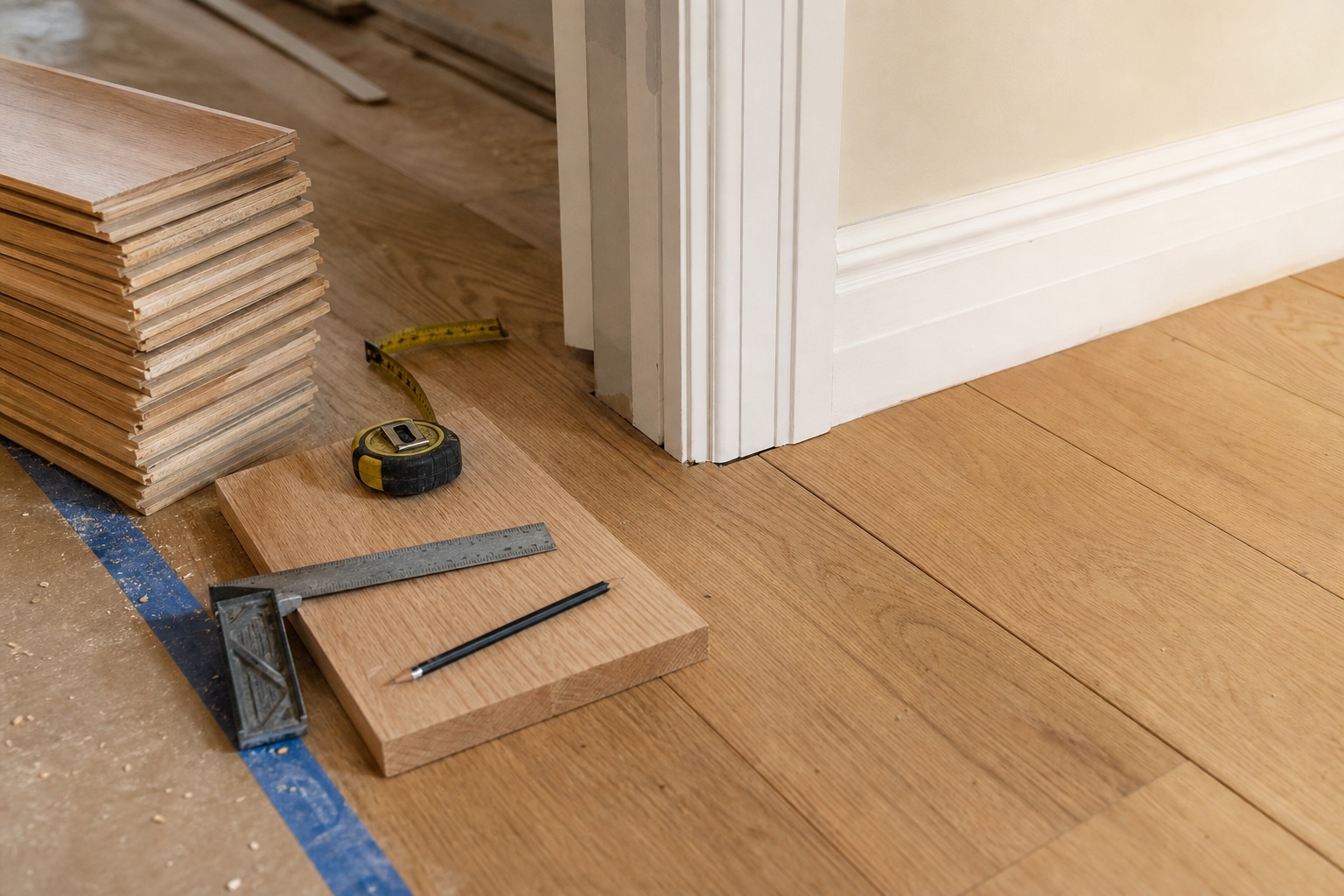
Renovation Guide
Real timber, laminate & hybrid flooring — with price estimates. Choosing the right floorboards is one of the most important design decisions when renovating or building. Flooring defines the aesthetic and atmosphere of a space, and impacts durability, maintenance, and long-term value.
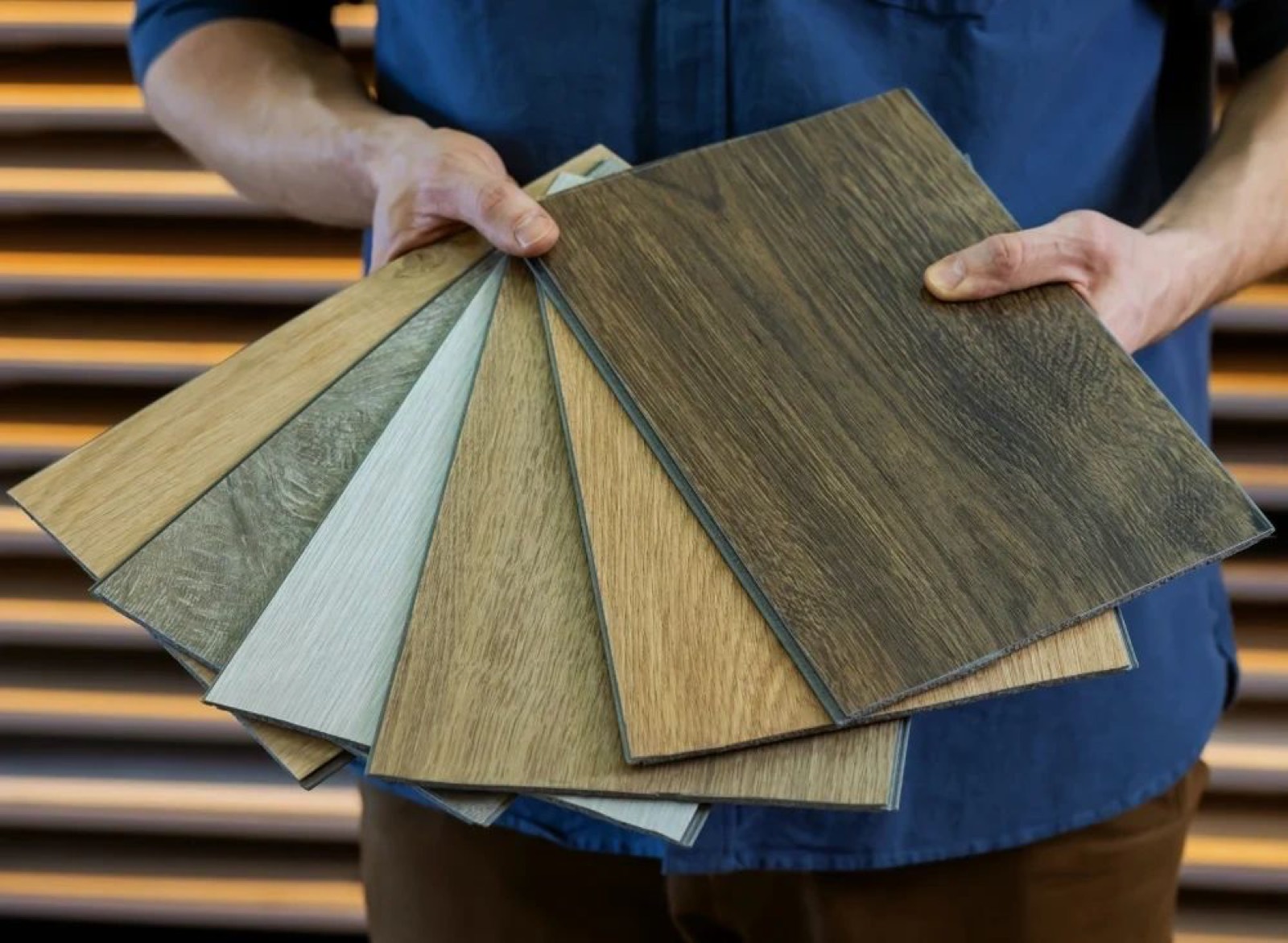
Nothing quite matches the warmth and authenticity of real timber. It comes in two forms: solid hardwood and engineered timber.
$110–$190+ per m² (material only), install ~$65–$110/m². Made from a single piece of hardwood, it can be sanded and refinished multiple times — ideal for a lifetime investment. Popular Australian species: Blackbutt (light, neutral), Spotted Gum (rich brown, durable), Jarrah (deep red, luxurious), Tasmanian Oak (soft pink), Brushbox (dense, smooth reddish).
Pros: long-lasting, refinishable, natural character, adds value. Cons: high cost, needs acclimation and professional install, sensitive to moisture and humidity.
$85–$150 per m², install ~$55–$90/m². A real timber veneer over a plywood or HDF core — more dimensionally stable than solid timber while keeping natural beauty. Refinishable 1–3 times; not suited to constant moisture. Best for living areas, bedrooms and dining rooms.
A budget-friendly alternative that mimics wood via a printed image layer. Standard $30–$55/m²; water-resistant $45–$70/m² (install ~$35–$60/m²). Pros: affordable, scratch- and stain-resistant, DIY-friendly. Cons: not waterproof, can feel artificial underfoot, cannot be refinished. Ideal for bedrooms, hallways, offices and rentals.
Hybrid merges laminate and vinyl — realistic timber visuals with 100% waterproof performance. SPC (Stone Plastic Composite) is rigid and extremely durable; WPC (Wood Plastic Composite) is slightly softer and warmer. $60–$95/m², install ~$45–$75/m². Fully waterproof, scratch-resistant, family- and pet-friendly, click-lock with built-in underlay, underfloor-heating compatible. Best for all areas including kitchens, laundries and bathrooms.
Cost note: indicative 2026 Sydney supply-and-install planning ranges. Confirm substrate preparation, stairs, trims and acoustic requirements before finalising selections.
2026 Planning Context
NSW land values reached $3.09 trillion at 1 July 2025, based on more than 66,000 property sales analysed by the Valuer General.
Source: NSW Valuer General.
NSW Low and Mid-Rise standards use 450sqm minimum lot size, 12m minimum width and 0.65:1 FSR for dual occupancies in eligible areas, subject to zoning, site constraints, local controls and applicable planning provisions.
Source: NSW Planning.
Cotality reported Sydney dwelling values fell 0.9% in May 2026, making feasibility and approval certainty more important before major capital spend.
Source: Cotality HVI June 2026.