
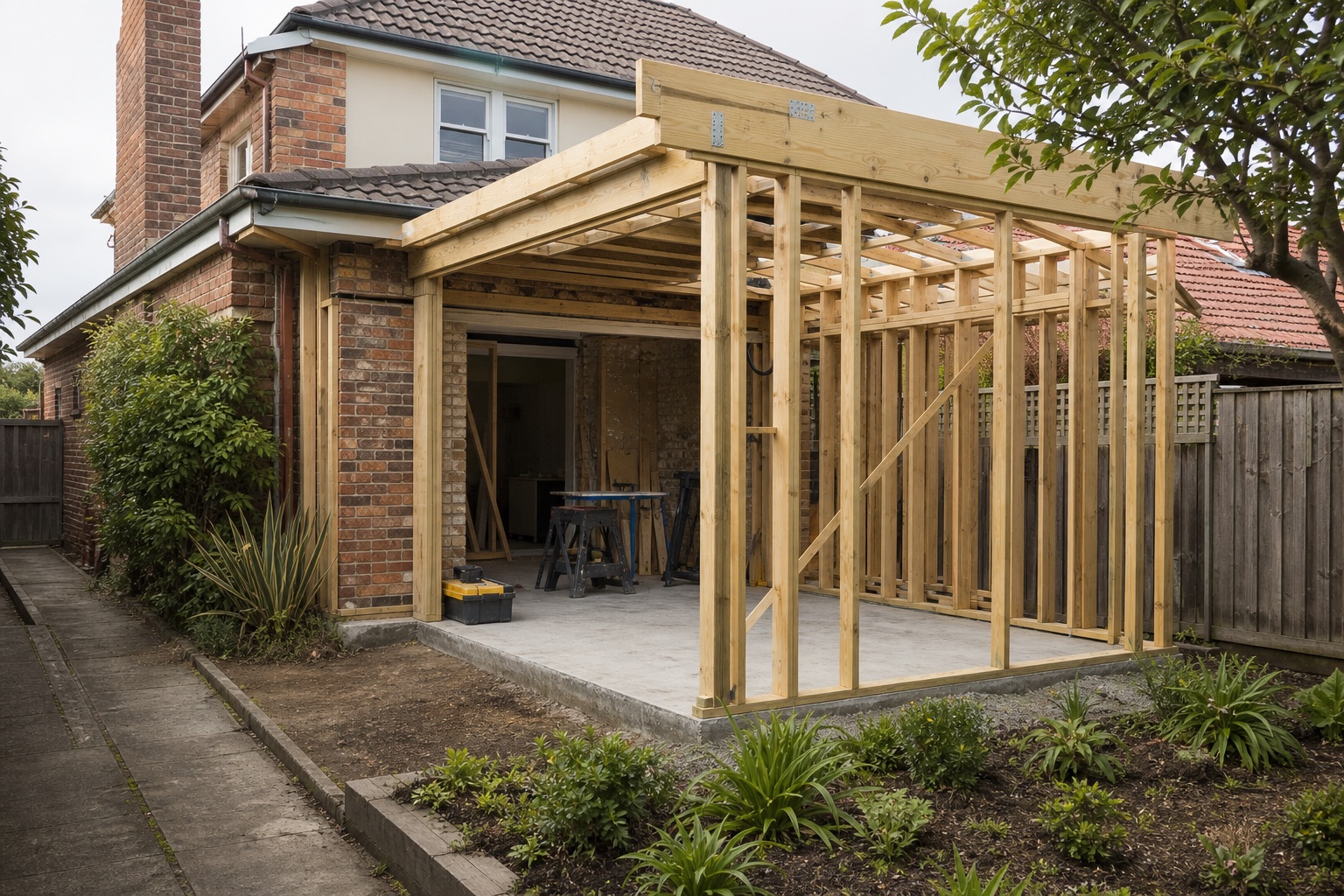
Extensions · Add Out
Open up how your home lives — light, flow, and a real connection to the backyard.
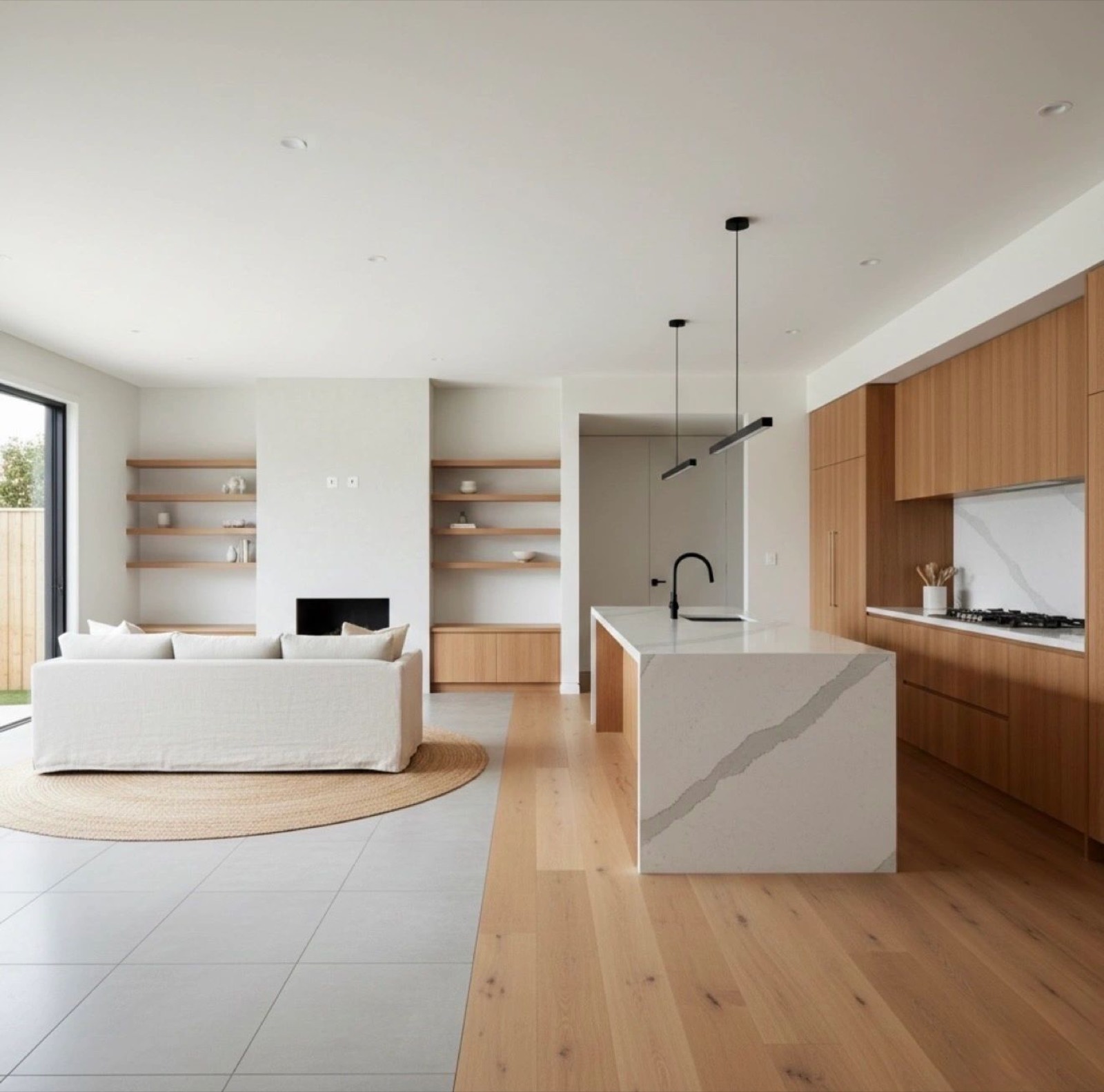
A rear extension is designed to improve how the home is lived in day to day. By opening up the kitchen and living areas and strengthening the connection to the backyard, the home gains light, flow and flexibility for family life and entertaining — blending naturally with the original home rather than reading as an add-on.
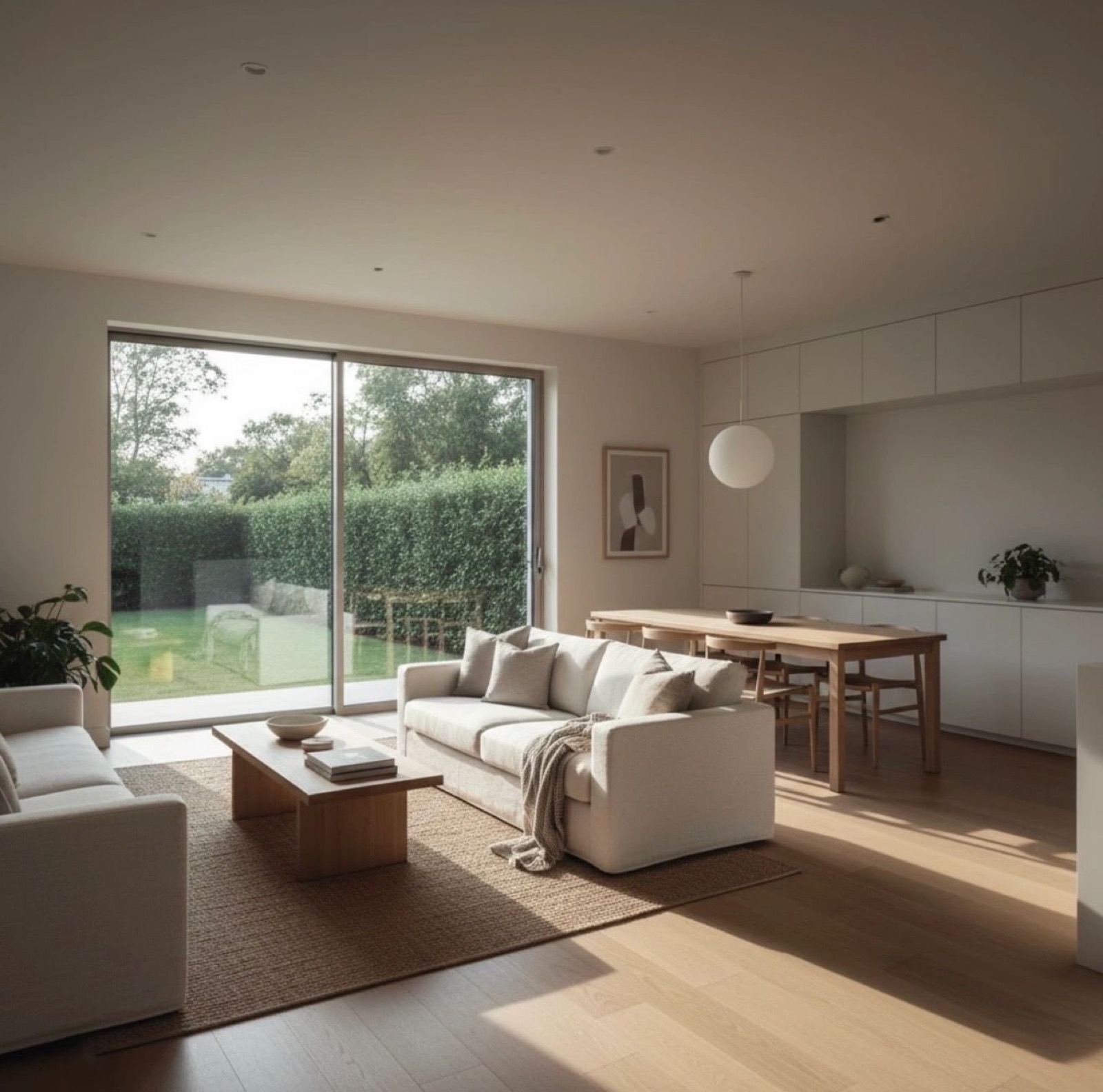
We rework the back of the home to create a functional open-plan layout. Structural changes are carefully planned to maximise natural light and create clear movement between indoor and outdoor spaces — a home that feels larger, calmer and better suited to long-term living.
Rear Extension FAQ
Some rear extensions can be approved under CDC if every rule is met. Lot size, setbacks, height, landscaped area, stormwater, privacy, heritage and tree controls can push a project into DA instead.
A ground-floor extension is better when the block can support it without sacrificing too much backyard or resale value. A second storey may be stronger when land is tight or backyard space is worth preserving.
Easements, stormwater lines, protected trees, heritage controls, slope and side access can all change the answer. These constraints should be checked before paying for detailed plans.
See what footprint your block allows.
Check Extension Feasibility2026 Planning Context
NSW land values reached $3.09 trillion at 1 July 2025, based on more than 66,000 property sales analysed by the Valuer General.
Source: NSW Valuer General.
NSW Low and Mid-Rise standards use 450sqm minimum lot size, 12m minimum width and 0.65:1 FSR for dual occupancies in eligible areas, subject to zoning, site constraints, local controls and applicable planning provisions.
Source: NSW Planning.
Cotality reported Sydney dwelling values fell 0.9% in May 2026, making feasibility and approval certainty more important before major capital spend.
Source: Cotality HVI June 2026.