
Guide · Planning
FSR is the ceiling on how much you can build. Understand it, and you understand your block’s potential.
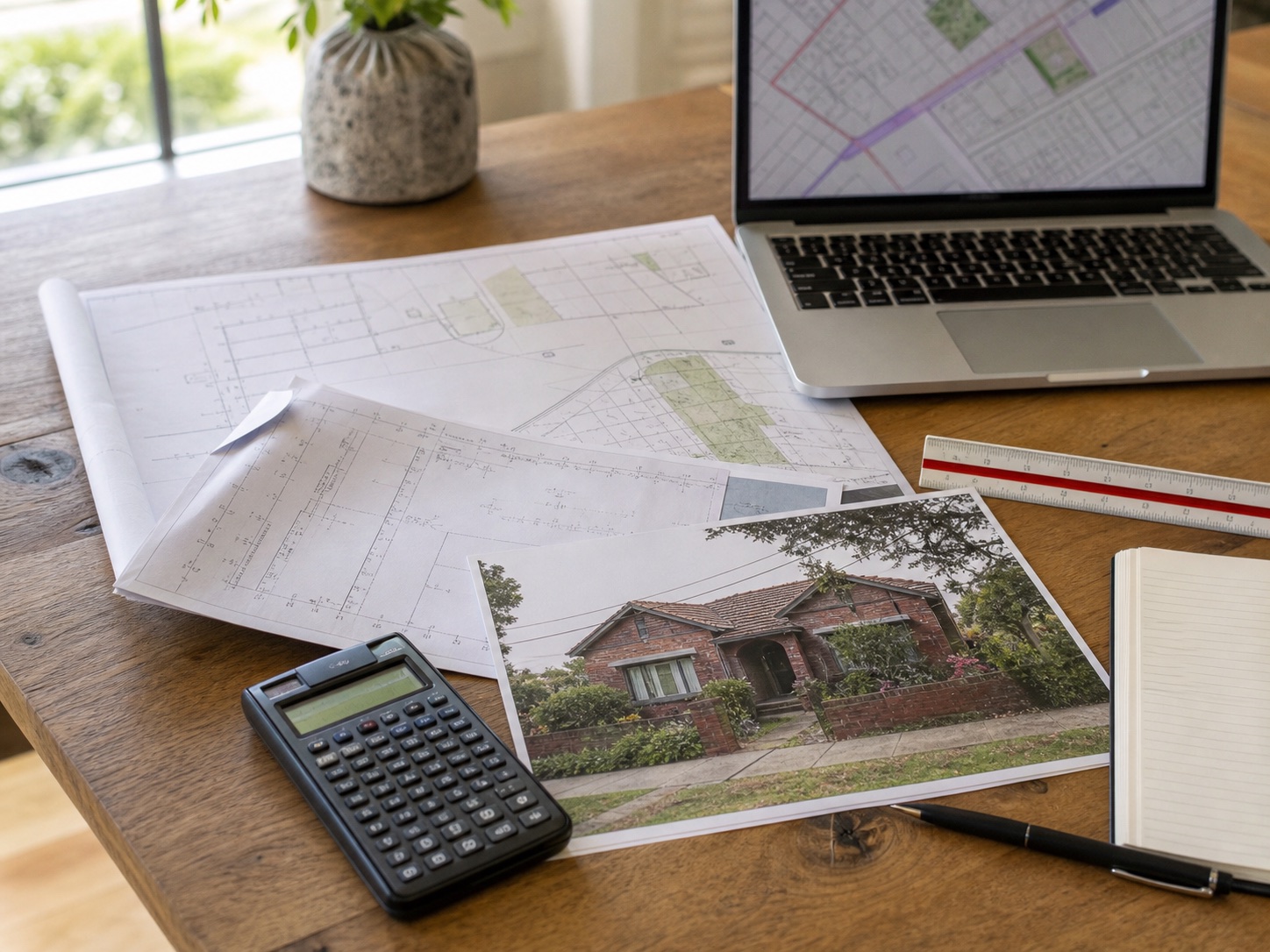
If there’s one planning number worth knowing before you extend, it’s your FSR — Floor Space Ratio. It’s the control that sets the maximum floor area you’re allowed to build on your land, and it’s written into your council’s Local Environmental Plan (LEP).
FSR is a ratio of building floor area to land area. Your maximum Gross Floor Area (GFA) is:
Max GFA = Land area × FSR
So a 600m² block with an FSR of 0.5 has a maximum GFA of 300m² — that’s the total floor area allowed across all levels combined, not per floor. If your existing home is already 250m², you have roughly 50m² of floor area left to add before you hit the ceiling.
FSR is the reason two identical-looking homes can have very different potential. It tells you:
It works alongside other controls — height limits (often around 8.5m for two storeys), setbacks, and site coverage — but FSR is usually the headline constraint on how much you can build.
Your FSR is mapped in your council’s LEP (Clause 4.4) and published on the NSW Planning Portal. Reading it correctly matters: it’s an authoritative numeric value, not a band or estimate. Our free Block Assessment reads your address against the official FSR and land data and shows you, in plain terms, whether your block still has room to grow.
This is general information, not advice for your block. Zoning, FSR and structure differ site to site — the only way to know what your land can do is to check it. Start with our free Block Assessment, and for a definitive answer, a Lot Strategy Brief.
2026 Planning Context
NSW land values reached $3.09 trillion at 1 July 2025, based on more than 66,000 property sales analysed by the Valuer General.
Source: NSW Valuer General.
NSW Low and Mid-Rise standards use 450sqm minimum lot size, 12m minimum width and 0.65:1 FSR for dual occupancies in eligible areas, subject to zoning, site constraints, local controls and applicable planning provisions.
Source: NSW Planning.
Cotality reported Sydney dwelling values fell 0.9% in May 2026, making feasibility and approval certainty more important before major capital spend.
Source: Cotality HVI June 2026.